Today’s more complex battlefield requires advanced technology to counter obscurants and decoys. To prepare allies for emerging electronic warfare challenges, advanced EO and IR sensor technology is being developed to counter hostile threats and help personnel maintain maximum situational awareness. EO sensors form an important part of modern battlefield awareness: how can these advanced technologies prepare allies for emerging electronic warfare challenges?
In this article, we’ll examine how electronic warfare has changed the face of battlefield tactics and the different methods used to overcome battlefield obscurants and decoys. From smokescreens and debris to multi-spectral masking and EO deception, countermeasures are required for both contemporary and ‘old-school’ challenges. We’ll look at the available options, their advantages and disadvantages, and emerging technologies that could improve mission success in challenging and hostile environments.
The rising challenge of deceptive electronic and visual decoys on the battlefield
Deceptive electronic and visual decoys are one of the most disruptive influences in modern warfare. They are so impactful because they exploit technologies designed to make the battlefield more predictable. Decoys are highly effective at creating ambiguity, sending false messages, confusing misinformation, and causing the usual roots of intelligence gathering to produce incorrect data.
Without accurate and real-time data and intelligence, a commander is effectively blind. The battlefield fills with shadows and misdirection, with drones, sensors, ISR missions, and high-tech ordnance all incapable of achieving their mission targets. This ambiguity wastes munitions, misallocates ground and air forces, and leads command units to doubt their own intelligence.
This arms race between detection and deception has to be redressed, removing blurred lines between real and fake targets and reestablishing a more structured and, most importantly, accurate level of situational awareness. It also has to reduce the operational risk faced by the combat teams on the ground or in the air.
What kind of obscurants and decoys pose the biggest challenges?
Let’s break this down into two categories – deliberate or intentional obscurants and decoys, and environmental or consequential obscurants. In the first group, deliberate obscurants focus on attacking multiple sensors with multi-spectral deception tools that effectively ‘blind’ technologies such as visual and thermal sensors, radar, and multi-spectral sensors. These can include drones, target recognition systems, and even satellite imagery.
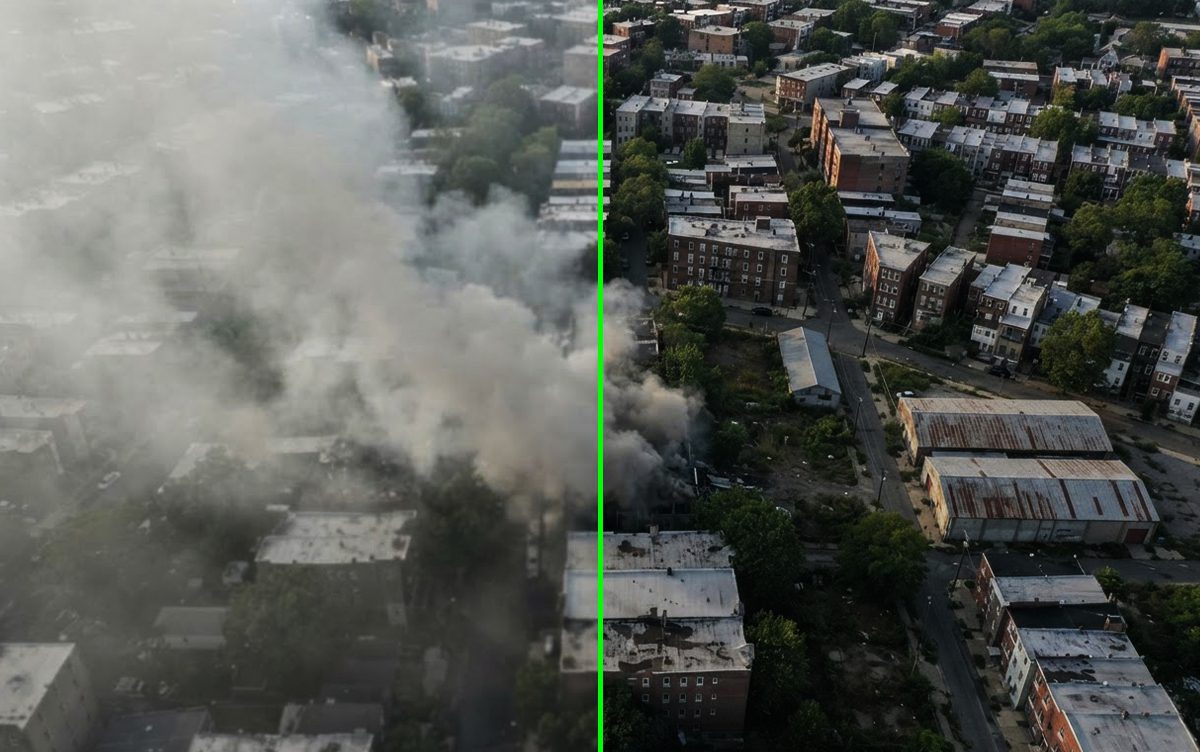
The second group – consequential obscurants – can range from dust and haze to smoke and can often be mitigated using image-enhancement techniques such as dehazing software.
It is the intentional obscurants that create false realities that appear authentic that are the biggest problem. These can include electronic warfaresystems that manipulate everything from GPS signals and sensor data streams to EW spoofing decoys that emit fake radar or communications signatures. EW spoofing decoys are currently one of the biggest issues in theatres, as they can overload signals with false positives and can potentially misdirect GPS-dependent systems, with catastrophic consequences.
Some obscurants, such as thermal signature replication, multi-spectral masking, and electro-optical deception, can have a huge impact on the decisions made by combat teams and command units both on the ground and in the air. Without countermeasures, you are effectively sending in teams ‘blind’, putting them at an immediate disadvantage in what could be a highly dangerous combat situation. It is therefore vital to use every electronic warfare countermeasure at your disposal, including AI.
How can technology help allies combat emerging decoy technologies?
The most important thing electronic warfare technology can do is restore a sense of trust in the sensory picture commanders receive of a battlefield. While humans are skilled at recognising inconsistencies that may indicate decoys, AI can certainly help detect deception more quickly by processing intelligence faster with algorithms.
The role of EO and IR sensors in counter-deception operations
EO and IR sensorsplay a pivotal role in counter-deception operations by enabling decision-makers to validate data, cross-check information, and effectively disprove misinformation or decoys. They do this by breaking through the illusion created by sensory and electronic decoys by identifying inconsistencies in both visible and thermal spectra. Put simply, they can spot a decoy heat signature or enhance imagery affected by a base-level misdirection.
Multi-Spectral EO/IR Detection introduces a level of authenticity to visible imaging, short-wave IR, mid-wave IR, long-wave IR, and cross-spectrum target analysis, helping to distinguish genuine targets from potential decoys. Thermal Signature Analysis detects hidden heat sources, identifies thermal inconsistencies and tracks targets through degraded environments, even when those environments are masked by consequential obscurants such as smoke, haze, and battlefield debris.
The ability to see through these obscurants enables High-Resolution Target Characterisation to perform shape analysis and help distinguish genuine armoured vehicles from likely decoys, for example. It also provides analysts with clearer data for motion pattern recognition and greater accuracy in signature comparison, helping identify what’s real and what’s fake. EO and IR sensorscan also aid in spectral fingerprinting, where the unique patterns of light absorption or various EM spectrum emissions can be identified accurately through the deployment of hyperspectral sensors.
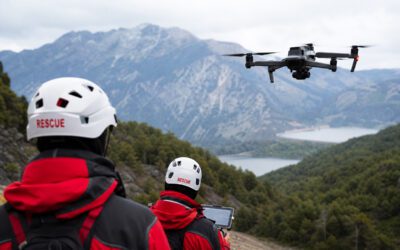
Analysts also have a range of contemporary tools at their disposal, many of which can be packed into a relatively small unit for use in aerial platforms such as helicopters. These mission consoles, such as FlySight’s groundbreaking OPENSIGHT console, provide counter-deception capabilities to field operatives. These effectively ‘clear the path’, allowing reconnaissance units to send clearer intelligence data back to the command centre. These tools include:
Augmented Reality overlays and geospatial situational awareness
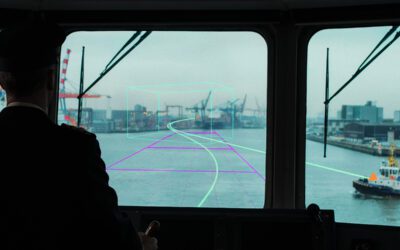
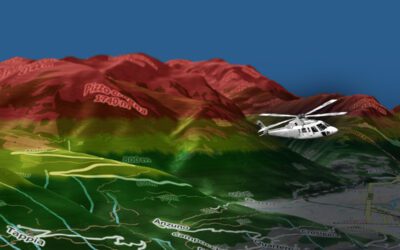
AI innovations and the development of augmented reality mean that multi-layered systems can create a dynamic geospatial model of a location that combines visual information and tactical data into a single model. Mission Consoles like FlySight’s OPENSIGHT can overlay these tactical layers, friendly positions, threat zones, and real-time sensor data that enable operators to distinguish and correlate real and simulated elements directly on video feeds or tactical maps.
Multi-sensor fusion (EO / IR / multi-spectral data fusion)
While complex decoys may interrupt multiple sensors, it is far more likely that a decoy will deceive a single sensor type (e.g., only IR or only visible spectrum). The fusion of multiple sensor sources enables comparison of different signatures and the identification of anomalies between real and artificial targets.
AI-based detection, classification, and identification
Because they use machine learning, AI algorithms can be trained to recognise typical decoy patterns or detect behavioural inconsistencies such as movement characteristics, thermal signatures, geometry, or temporal persistence. Even if the enemy changes their decoy patterns, AI models can be trained to recognise these changes, adding that information to an ever-expanding database that can be used to identify subsequent decoy attempts more quickly.
Video enhancement tools (dehazing, fog suppression, contrast enhancement, super-resolution)
For obscurants such as smoke, aerosols, dust, and battlefield camouflage, capabilities such as fog suppression, infrared enhancement, histogram equalisation, and super-resolution can improve visibility and enhance image detail. This ‘dehazing’ software is an integral part of the OPENSIGHT Mission Console, giving a clearer picture of the theatre for both aerial units and ground commanders.
Real-time tracking and target persistence (ATR)
A real target generally maintains trajectory and behavioural consistency that a decoy may not exhibit. Persistent tracking can support the discrimination of false targets, eliminating them from the dataset and focusing purely on the actual target.
The use of sensor technology in military aviation
Electronic warfare sensors have long been a key part of military aviation, especially on helicopter platforms that can be far more vulnerable in a battlefield. Their relatively slow speed compared to a fighter makes them an easier target for ground-based hostiles, meaning that the better the sensor array they carry, the more defensive their position.
Advanced technologies can help helicopters handle decoy and obscurant encounters by providing the crew with a much clearer view of the terrain. Heat signatures can make thermal signatures easier to distinguish, while dehazing technology allows crews to punch through obscurants to see the ground below.
For aerial platforms, EO and IR sensors are not just desirable; they’re essential. The compact nature of electronic warfare sensorsalso means that – even in a platform with very limited ‘free space’, such as a helicopter – complex mission consoles can be integrated into many legacy systems.
As well as aerial platforms, there are plenty of operational applications and use cases for advanced EO and IR sensor technology, both on land and at sea. Historically, small, armoured vehicles have been particularly vulnerable to attack, with hostiles using both decoys and obscurants as a precursor to attacks. Electronic warfare helps improve survivability of attack by allowing operators to clearly identify decoys and see through obscurants.
EO and IR sensors are also invaluable for ISR missions and naval and maritime surveillance. They allow units to collect accurate intelligence and reconnaissance data, free from the false information generated by decoys. If hostiles are trying to ‘hide’ something (for example, an operating base in remote terrain), EO sensorsand IR capabilities allow ISR units to identify locations more quickly and withdraw safely.
Advanced technology for complex operational environments
Advances in electro-optical and infrared (EO/IR) sensor technologies are reshaping how complex environments are analyzed and understood. The combination of multi-spectral sensing, dehazing software and augmented reality capabilities provides enhanced situational awareness, helping operators overcome challenges caused by limited visibility, obscurants and other environmental factors.
While developed for demanding civil operational scenarios, OPENSIGHT technology demonstrates how advanced visualization and sensor integration capabilities can support a wide range of applications beyond the battlefield. Its adaptability, modular architecture and intuitive interface allow it to be customised to meet specific user requirements, reducing training needs and supporting effective deployment in real-world environments.
Discover more by reading our resource, “OPENSIGHT’s sensor technology for complex operational environments, or explore the system’s capabilities through our video resource library.
Get in touch to learn more about OPENSIGHT’s advanced sensor integration capabilities or explore our Solutions Page.