With continuing threats to international borders from terrorism, drug running, trafficking, and irregular migration, border surveillance systems are a fundamental element of overall logistical homeland defence policies. The rapid advancement of border protection technology and surveillance, and, more recently, the introduction of AI, mean that larger areas can now be surveilled by remote operators.
In this article, we’ll take a more in-depth look at border security systems that have advanced way beyond the usual ‘fences and razor wire’ approach of yesteryear. We’ll look at how technologies like CBP drones (in the US) and AI are assisting human operators in the ongoing battle to protect borders. We’ll examine why this is so important and look at the key challenges in deploying advanced border technology, along with their advantages.
We’ll also discuss the role of cutting-edge mission consoles, such as FlySight’s innovative OPENSIGHT console, and how they can help airborne units work in tandem with ground-based control centres to identify targets that might otherwise be missed.
The foundation of modern border protection systems
The almost-exponential advancement of border surveillance systems has meant that historic setups are now no longer truly fit for purpose. Border protection technology now goes beyond ‘boots on the ground’ and fences, combining AI-driven analytics, multi-sensor cameras, EM-spectrum monitoring, and even autonomous aerial platforms, such as CBP drones, that can cover far larger areas.
Modern advanced border surveillance systems are no longer reliant on one technology. Rather, they combine the best of many, integrating everything from satellite imaging and drones through to spectrum intelligence gathering.
The evolution of border surveillance systems
Border security surveillance and protection have shifted from the horse-powered ‘customs enforcement’ of the 18th and 19th centuries to border-protection patrols for much of the 20th century.
As border conflicts increased during the mid and latter half of the 20th century, border protection turned more towards militarised systems that relied heavily on ground-based technologies. While effective, these militarised systems were very expensive to set up and maintain and were often seen as highly confrontational.
Today, cutting-edge border security systems rely on data-driven networks that use state-of-the-art technology. Many border operations now complement traditional patrols with networked surveillance technologies. The key advantage of this technological upgrade is that these systems can be integrated to give a more joined-up approach to border security. They are also far more cost-effective and, ultimately, better at policing borders even in the most remote locations.
Key benefits of using technology for border protection
Technologically advanced border surveillance systems have a variety of benefits over more traditional operating methods.
- Reducing illegal immigration – The use of multi-spectrum imaging, including infrared and thermal imaging as well as night-vision systems, means that anyone crossing a border illegally can be more readily detected, even under cover of darkness. It can also help to identify weak spots in the border or areas that are frequently used by illegal immigrants, allowing enforcement officers to focus patrols in those areas or make repairs to fences or barriers.
- Reducing foreign threats – Using more covert surveillance operations can help to de-escalate tensions without leaving borders vulnerable. The net that border protection technology provides is far more comprehensive than traditional methods, offering real-time coverage of borders and identifying incursions that may pose a threat to national security.
- Cost saving – Heavy military equipment (and the manpower to maintain and operate it) is very expensive. Technologically advanced operations are more cost-effective, and many of the latest surveillance and target-acquisition systems can be integrated into legacy systems. This makes training easier and more intuitive and improves overall cost efficiency. Manpower can be more effectively deployed to areas that need it most without compromising the security of other parts of the network.
- Streamlining immigration checkpoints – Aerial autonomous border surveillance systems, such as CBP drones, as well as multispectral cameras, can cast a much wider net over official border crossings, helping identify unusual activity on either side. This permits human operators and border staff to focus on streamlining the checkpoint process, while allowing surveillance operations to remain unobtrusive.
Innovative border surveillance systems
The technological push forward in surveillance systems has made border control much more manageable. The multitude of advancements comes in all categories, from cameras to unmanned drones.
Thermal imaging and night vision systems – One of the biggest ‘blind spots’ for borders isn’t location, it’s visibility. Thermal imaging and night vision systems can detect heat signatures even in darkness. While thermal imaging and night vision have been around for a while, the advent of modern multispectral cameras and integrated border security systems makes these the first line of defence for patrolling borders at night.
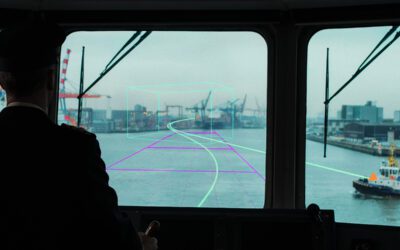
Radar-based detection systems – together with LiDAR and, for maritime operations, sonar – have become far more compact. It is possible to fully integrate these complex systems into both ground- and aerial-based platforms.
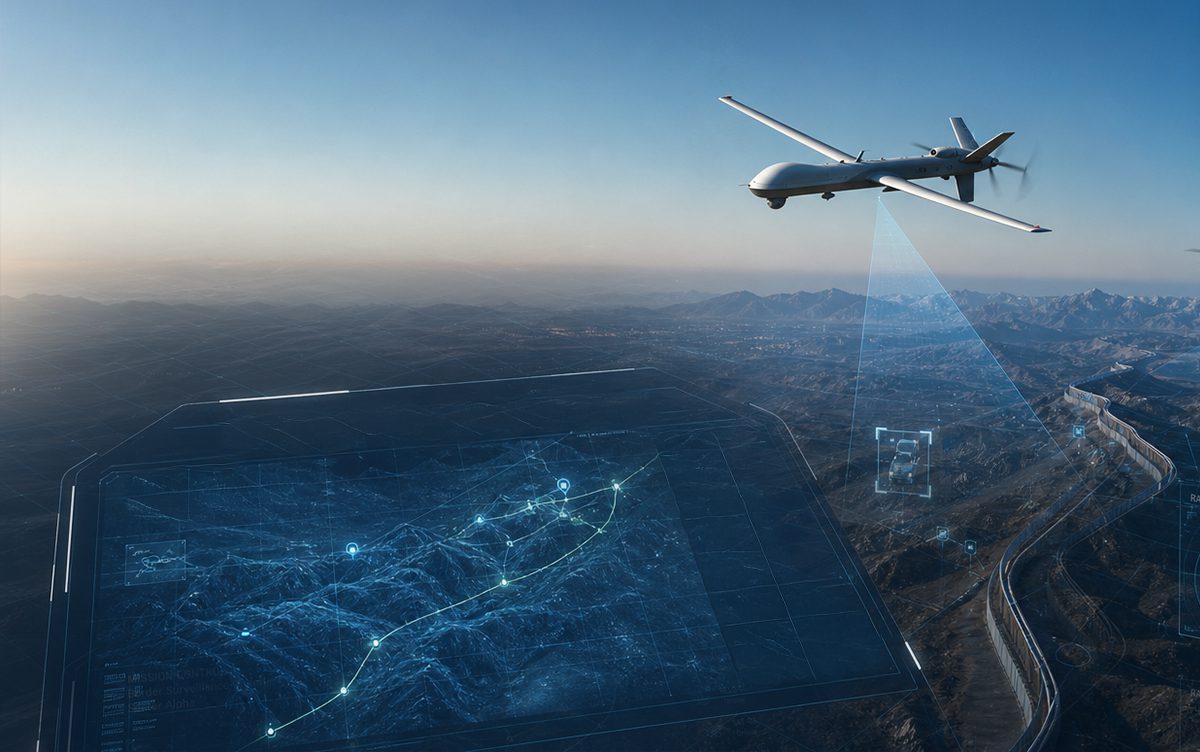
Automatic target recognition – Automatic Target Recognition, or ATR, can take video images captured by EO sensors and identify a target, even in complex situations. Systems such as OPENSIGHT can identify and lock onto a target, filtering irrelevant background information and maintaining surveillance while the target is in motion. This intuitive system effectively gives operators a focused ‘eyes-on’ view of the target, even in complex urban or remote rural environments.
Satellite links – Satellite technology is an invaluable tool in surveillance operations. Capable of sweeping vast areas and providing wide-area coverage that is difficult to replicate using ground-based assets, satellites can pick up details that might otherwise be missed. For example, a frequently used trail through a remote section of a border may not appear on other image sources but may be clearly visible in a satellite image. Thanks to Cloud storage, data can be securely transferred into a database, which can then be accessed and combined with other operational systems.
Integrated sensor networks – Sensors used for ground- and aerial-based networks are now much easier to interconnect, allowing everything from seismic and magnetic sensors to smart camera traps and acoustic sensors to interact with aerial platforms. This overlay of data gives human operators a far more detailed four-dimensional map that can help narrow incursions to a highly accurate location.
Biometric verification and identification systems – Border crossing points may still rely on the skills and instincts of human operators, but biometric verification makes things a whole lot easier. Movements can be tracked, and individual targets acquired and identified more accurately, where legally authorised. This is especially important in high-risk operations, such as preventing drug smuggling from becoming established at remote checkpoints.
Real-time data integration – The foundation of any surveillance operation is the gathering and interpretation of information. Near-real-time data integration and storage in the Cloud make accurate, up-to-date data accessible to everyone concerned with border surveillance and protection.
Aerial-focused mission consoles – Aerial units, in particular helicopters, are crucial to the success of border surveillance operations. Creating bespoke aerial mission consoles such as FlySight’s OPENSIGHT console and by providing data from a variety of sensors, as well as turnkey solutions such as dehazing software and multi-spectral sensor correlation, helps maximise operational effectiveness. Joined-up solutions reduce operator fatigue and utilise flight time to the maximum advantage.
Drones in border surveillance
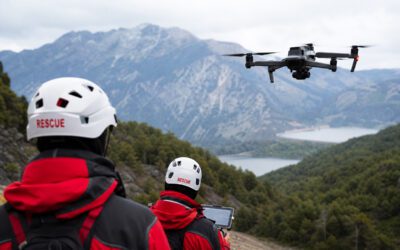
Drones are, without a doubt, one of the most important advancements in modern border security systems. Unmanned drones with extended air time capabilities are now a key part of border surveillance. They provide fast, flexible, and cost‑effective monitoring with real‑time intelligence that can be easily integrated into a full surveillance network.
Equipped with a myriad of sensors, including thermal imaging, high-resolution cameras, radar, and long-range communication, they can conduct persistent patrols over rugged terrain that may not be easy for ground-based units to monitor. In the US, If an incursion is spotted, CBP drones can relay the exact coordinates to ground teams, who can then converge on the location.
Drones can be quickly deployed, making them a fast-response option for an ongoing surveillance operation. This fluidity makes them invaluable against hostiles that may be highly mobile and technologically advanced themselves. Their relatively low operational costs when compared to helicopters or other airborne platforms also make them extremely popular with border patrol agents.
The role of AI and predictive analysis in border security
Alongside the development of drones, AI has also been a gamechanger for border protection technology. AI is exceptionally good at pattern recognition and big data analysis. It can sift through vast amounts of information, identify key components, and use machine learning to adapt to changing parameters.
In addition to pattern recognition, it can help build detailed strategies through risk assessment and predictive analytics. This enables human operators to make far more informed decisions, using the latest available information and predicted potential outcomes. As an automated decision support tool, AI is an invaluable addition to modern border surveillance systems.
The key challenges in deploying advanced border technologies
There are, however, a few challenges that advanced border technology must address. At the top of the list is the ever-present consideration of privacy. For anyone living close to a border, constant surveillance can be a serious imposition and could be challenged under civil liberties legislation if found to be overly invasive. A balance has to be struck between border protection and individual rights.
Initial implementation costs can be high, especially for ultra-high-tech equipment such as satellite links. Effectiveness has to be considered, so systems that can be easily integrated into legacy networks are preferable, as they offer greater value for money, less time spent on training, and a higher return on investment.
Harsh environmental operating conditions can sometimes shorten the lifespan of high-tech equipment. Again, those that can be retrofitted to an existing legacy system can reduce replacement costs by making better use of existing infrastructure.
The future of modern border surveillance systems
Surveillance technology rarely stands still, and new developments are driving the border protection technology industry forward. The introduction of elements such as swarm-drone monitoring could expand the ability to surveil a larger area, while edge AI processing will further speed up data analysis and mission strategy planning.
OPENSIGHT, FlySight’s exceptional Mission Console system integrates a host of border surveillance technology solutions, from target acquisition to sensor correlation. You can find out more by reading our post on how AI can be used to track targets. Or contact us and talk to one of our team to find out more about OPENSIGHT’s potential.