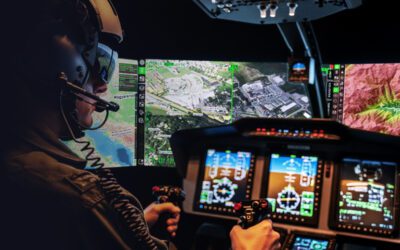
Military situational awareness is one of the pillars of good strategy in any arena. The principle of accurate, real-time information that enhances an operator’s understanding of their surroundings allows them to make split-second decisions. It increases the likelihood of a successful mission outcome. For military helicopters, this principle of enhanced military situational awareness is paramount to the safety of the crew and the aircraft in often highly hostile situations.
In this article, we’ll explore the principles of situational awareness in a military setting and how the MOSA (Modular Open Systems Architecture) approach enhances it. We’ll examine what MOSA actually is, and how it’s applied to combat and non-combat roles. We’ll take an in-depth look at what situational awareness in the military is and look at the technology currently available to enable operators to work at maximum safety and efficiency. We’ll also discuss the challenges and the future role of systems such as MOSA in military situational awareness, and how systems like FlySight’s OPENSIGHT are pushing the boundaries of this field to the next level.
What is military situational awareness?
Military situational awareness is the understanding of real-time factors in a combat zone, which includes hostile, friendly, and neutral components. It also considers key elements such as terrain and weather conditions, visibility, and whether it is obscured by haze or smoke.
This real-time awareness can provide clues to the positions and intentions of enemy forces, the vulnerability of neutral or civilian elements, and whether ground troops require crewed or uncrewed air support. All of this comes together to ensure a tactical advantage in any manoeuvres or operations, regardless of the theatre.
Endsley’s model of situational awareness in the military
Situational awareness can be applied to any scenario, whether it’s an urban combat zone, a search-and-recovery mission, or a rural landscape with difficult terrain. It is obtained through the gathering and analysis of data from reconnaissance flights (often by drones or UAVs), satellite telemetry, and other sensors such as infrared photography, LiDAR, and Radar.
This data is collated and analysed to extract relevant information in real time. In a fluid combat zone, constantly updating the data is essential and requires ‘eyes on’ around the clock.
Once carefully analysed, predictions and the ability to anticipate future states of the situation can be used as a basis for mission decision-making.
This process of ‘Perception, Comprehension, and Projection’ is is commonly known as Endsley’s model and is widely adopted as a foundation for military situational awareness frameworks. What makes this process different in the 21st century is the development of highly sophisticated software and hardware, alongside the advent of Artificial Intelligence and Augmented or Enhanced Reality to provide a far more detailed set of data and consequent analysis. This, in turn, leads to a far more measured and accurate predictive process and a greater chance of mission success.
MOSA – the modern enabler
MOSA isn’t a thing; it’s a concept that benefits the development of military strategies worldwide. The acronym stands for Modular Open Systems Approach and is a methodology based on the use of interchangeable modular components that work within open standards in military system designs. This enables different technologies to integrate quickly and easily, enabling faster upgrades and better interoperability.
Within a MOSA-compliant system, individual components come together to create a bespoke system tailored to the end user. For helicopter operators, this usually takes the form of a console with customised plug-ins that can be replaced, upgraded, or modified as requirements change.
MOSA relies on the Open Standards principle, where interfaces and protocols are standardised so that each unit or module is compatible across multiple platforms. This means that multi-national forces such as NATO can more easily operate interoperable systems despite having different hardware, as the individual modules are interoperable across various formats.
Why is MOSA such a good idea? Well, apart from the obvious (a unified system applicable to all operators), it has a range of other benefits, including vendor-agnosticism, which reduces the reliance on a single supplier. This encourages diverse innovations within the MOSA framework, ensuring new advancements, especially in the field of military situational awareness modules, can be brought online quickly and effectively without the need for massive redesign of legacy systems.
Military situational awareness technologies
The key takeaway from MOSA is that it isn’t a single entity but a concept of bringing together diverse, interoperable technologies to enhance the performance of military tactics, particularly aerial operations. In recent years, various MOSA-compliant technologies designed for use in helicopters and drones have emerged. These include:
- Fog suppression systems, also known as dehazing systems, use specialised sensors to significantly improve visibility and clarity in hazy conditions caused by weather or man-made smoke, providing operators with a clearer visual display of their terrain.
- Real-time data analysis: High-speed connectivity and integration between on-board and external sensors, such as satellites, can send data to the cloud, be bounced back to command centres, analysed, and a revised operational plan communicated to the flight team in real time. In the fluid environment of a hostile theatre, this is one of the most critical developments in military situational awareness in decades.
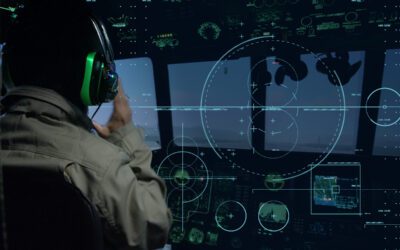
- AR overlays in real-time: Augmented or Enhanced Reality adds a whole new dimension to military situational awareness. These overlays can be superimposed to provide additional information to crews, down to key information about a structure or area (such as prior intelligence on its use or layout) that has been irreversibly altered by bombardment or natural disasters like earthquakes or mudslides.
- Video processing algorithms: Image processing technology has come a long way from the blurry, indistinct pictures of years ago. Now, video processing algorithms can ‘clean up’ images to produce sharper, crisper videos.
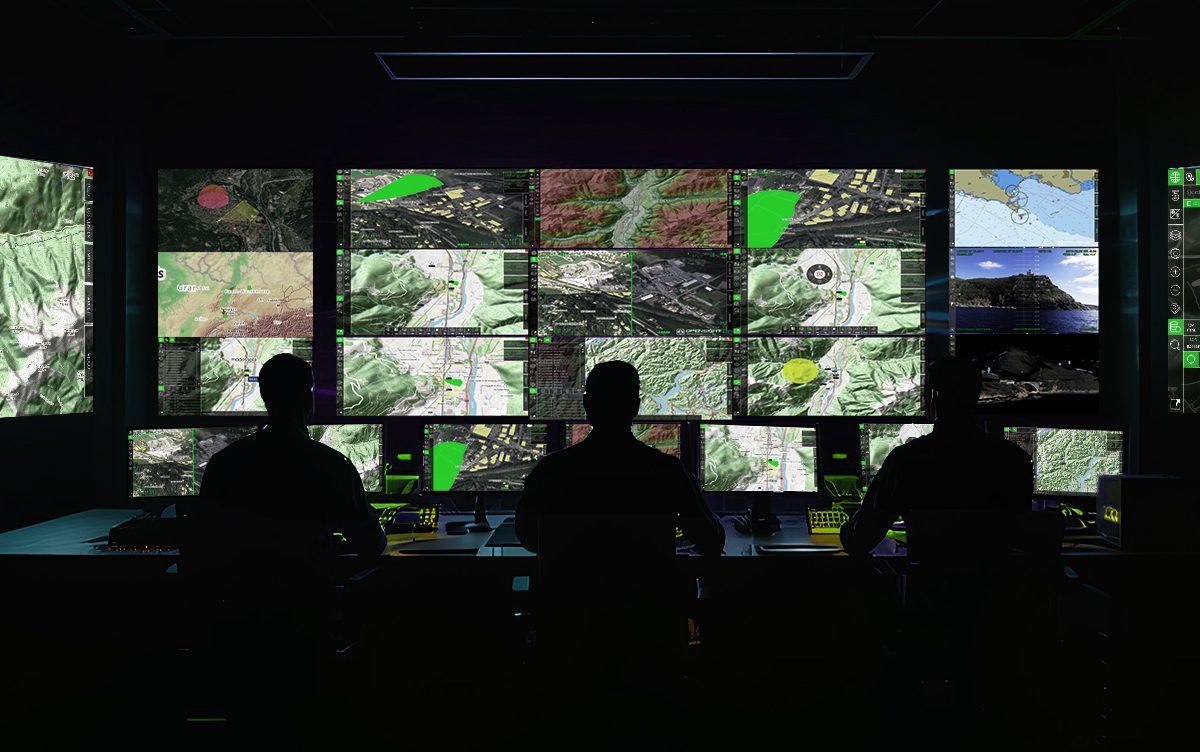
- Mapping sensors: Data gathering is key to military situational awareness, and whether they’re carried on a crewed or an uncrewed platform, they allow more accurate, detailed information to be collected in a single pass. AI, used alongside human scrutineers, is then employed to dissect this information, creating precise, up-to-date maps that can be used in future operations.
- Automatic target detection and classification: Artificial Intelligence networks specially developed to identify ground-based, maritime, and airborne targets allow commanders to adapt to the flow of the situation and relay clear, precise instructions to operational units. It should be noted that human verification remains crucial.
When all of these individual modules work together, they create a MOSA-compliant system that is an invaluable tool for military situational awareness. While there is no substitute for the human brain, MOSA-compliant technology serves as an effective ‘wingman’ for military teams, providing a seamless communication link between sensors and command systems to identify, analyse, and relay accurate information to operational units. It applies Endsley’s model of ‘Perception, Comprehension and Projection’ but takes it to another level.
The ‘plug and play’ design of modular consoles also makes it easy to integrate MOSA-compliant technology without complete system redesigns. However, there are still some issues around compatibility with some older legacy systems. But the adaptability of MOSA-compliant tech makes it relatively straightforward for innovative developers to circumvent these issues and create customised solutions.
You can find out more about FlySight’s approach and incorporation of MOSA-compliant technology into our console systems by reading our in-depth article The Modular Open System Approach (MOSA) and What it Means for Aircraft Avionics Mission Systems.
The Future of MOSA in avionics
As organisational barriers are addressed, MOSA is expected to become the dominant framework for implementing technology designed to enhance situational awareness. Military applications are veering more towards uncrewed operations, with drones playing an increasingly important role in modern warfare.
The focus now is on overcoming any remaining interoperability issues across various legacy systems, with MOSA representing a cohesive, practical solution for all military use.
FlySight has embraced the MOSA principles, and our innovative OPENSIGHT Mission Consoles are designed in accordance with the MOSA approach. Fully customisable, our modular system enables you to create a bespoke package that meets your exact needs, ensuring interoperability with legacy systems.
You can learn more about OPENSIGHT’s military situational awareness technologies in our resources section. Or contact our team direct to discuss your needs in absolute confidence.