Integrated modular avionics has been a quiet success story in the development of modern aircraft. IMA avionics – or simply “IMA” – is one of those concepts that has advanced the technological capabilities of aircraft, particularly helicopters, to a whole new level, yet are rarely discussed outside the aerospace industry. Enabling multiple critical systems to run simultaneously while reducing mental fatigue and increasing situational awareness for pilots and operators, modular avionics systems represent the cutting edge of customisable onboard and ground-based avionics technology.
In this article, we’ll take a more in-depth look at integrated modular avionics, examining what they are and their positive impact on flight operations. We’ll look at why modular avionics is a necessary part of the process, the benefits, and its real-world applications. We will also discuss why customisable modular avionics are so important across a range of sectors, and how FlySight’s OPENSIGHT modular console systems can create a fully integrated, mission-focused system onboard almost any aircraft operating today.
What is modular avionics?
Integrated modular avionics is an architecture that allows multiple modular functions controlling key aircraft elements to share common computing hardware rather than working separately. This is the opposite of older methodology known as federated avionics, where there were separate boxes for functions such as flight controls, navigation, and monitoring.
The issue with federated avionics is that the decentralised architecture means each box is not only expensive but bulky too. In a cramped cockpit, especially in smaller aircraft such as helicopters, space is at a premium. So, integrating modular systems to all use the same operating technology reduces weight and power consumption, saves space, and ultimately costs less.
IMA evolved as a modern alternative to older federated architectures with a network of modules that share a common computing source. It also allows systems to be customised to suit the individual needs of the operator. For example, a military helicopter will have different mission parameters than a Search & Rescue aerial vehicle, but there are points where the requirements overlap. Integrated modular avionics allows operators to create unique architectures without resorting to separate, bulky, and incompatible federated avionics.
As avionics become increasingly complex, IMA is a major step forward in the interoperability of avionics systems in modern aircraft and the cornerstone of modern aircraft design.
Why adopt IMA?
While federated avionics was an effective method for operating and maintaining aircraft, technology has advanced to the point that many traditional formats are now redundant. However, that doesn’t mean aircraft have to be scrapped just because the components have moved on. Indeed, one of the major advantages of integrated modular avionics is that it embraces compatibility with older hardware and can be integrated with legacy systems quite easily (–> Read OPENSIGHT integration with FlytX® Retrofit- FlySight_Thales_OPENSIGHT).
The compact nature of modern IMA also makes it easier to pack more into a confined space. And, as the modules use similar wiring harnesses, installation is reasonably quick and easy, even for multi-functional consoles such as FlySight’s innovative modular OPENSIGHT system.
Functions can be added, updated, or replaced without redesigning the entire avionics suite, making IMA the equivalent of an aircraft ‘app’ that’s running on familiar hardware. Partitions within the software keep everything compartmentalised, so each system remains isolated even though they share the same hardware.
The transition from federated to modular avionics has been a natural progression and has followed the broader integration of more advanced computerised and algorithmic systems. Modern aircraft are far more technologically advanced than their predecessors, and the development of integrated modular avionics has been a catalyst in the inclusion of more integrated systems. The improved scalability and flexibility of IMA, the ability to ‘customise’ consoles to create bespoke operational systems, and their lower lifecycle and maintenance costs make them a far more attractive option.
The fact that they are also more power-efficient (a key consideration for aircraft that need to make every airborne second count) is a strong argument for adopting integrated avionics. While federated avionics is still widely used, IMA represents the dominant direction for new aircraft design.
The key components of an IMA architecture
IMA architecture is constructed using hardware and software that allows safety and operational elements to function by using shared computing resources. These common computing nodes enable interoperability, but thanks to careful data-packet partitioning, there is no cross-contamination between functions.
Sophisticated systems employ timed CPU partitioning, which allows each part of the system to access guaranteed CPU time slots, while strict space partitioning allocates memory for each operation without leeching from other critical components.
The software used in an IMA architecture is tightly regulated, particularly for operational and safety features, which are certified in accordance with strict guidelines. For example, FlySight’s OPENSIGHT has been developed in accordance with relevant NATO STANAG interoperability standards, and is independently tested.
To link the separate modules into a cohesive operational system, high-speed networks provide virtual links that enable uninterrupted, predictable data transfer. The fact that the modules can connect to external sources, such as satellite data, also broadens the usability of IMAs across a wide range of situations and operational theatres.
Fault isolation ensures that an issue in one module does not corrupt any others, with robust software partitioning also preventing data bleed-through unless it’s required. This network could be considered the aircraft’s nervous system, relaying information between nodes or modules and redirecting it back to the brains of the operation, which, despite the high-tech nature of IMAs, is still the pilot and crew.
Real-world applications and uses
integrated modular avionics provides a robust architectural foundation on which AI and Enhanced Reality applications can operate. While not strictly necessary for the overall operation of an IMA architecture, they do enhance usability, making a system more encompassing and consequently, more effective for military, law enforcement, and civilian operations.
The flexibility of modular avionics enables numerous real-world applications. From simplifying operations in a commercial airliner to providing compact, space-saving consoles for helicopters, IMA’s major advantage is the customisable nature of its modular set-up. Plug-ins provide a wide range of setups that can be tailored to the specific operations of an aircraft.
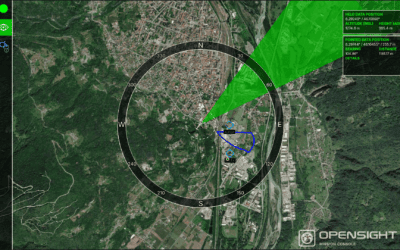
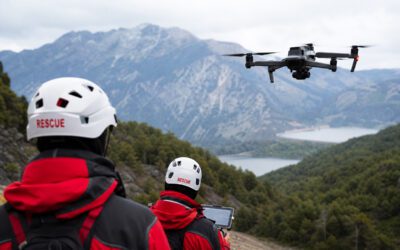
For example, Terrain data systems that use multiple overlays to create a 3D image of the ground are a major benefit for Search & Rescue teams. Law enforcement monitoring a large gathering can use crowd dynamics to direct ground units, while military helicopter pilots can make the most of target acquisition modules, particularly in hostile environments.
What does the future look like for IMA in vertical flight?
IMA continues to replace federated architectures in many new aircraft programmes. New software is constantly enabling helicopter operational systems to become more advanced, and with the advent of second-generation AI-enabled functionality, capabilities are rapidly expanding. AI offers the potential for greater autonomy, thanks to the development of drone systems. The interoperability of IMA means that it is a relatively straightforward process to integrate AI and Enhanced Reality modules into legacy hardware.
Further down the line, IMA in vertical flight scenarios could lead to greater support for single-pilot operations without increasing stress or mental fatigue. At the very least, it will enhance pilots’ geospatial and situational awareness by providing modules that can perform functions such as dehazing and terrain mapping. These types of modules are already available with cutting-edge consoles such as FlySight’s OPENSIGHT. But as we have already seen from the huge leaps forward in AI and VR, future advancements could be even more dramatic.
The FlySight OPENSIGHT Mission Console platform for helicopters represents the very best in integrated avionics and is built on the use of integrated modular avionics at its core. The platform has been designed to embrace the modular principles of IMA, allowing operators to fine-tune the system to suit their exact needs through the application of plug-ins and controlled by an augmented reality engine.
The OPENSIGHT Mission Console represents the next level of IMA architecture. We provide the integrator with the codebase of our software, so it can be easily modified to suit your hardware and plugins and other features can be added as needed. Put simply, OPENSIGHT captures the fundamentals of IMA and allows the user to make it uniquely their own.
You can find out more about OPENSIGHT’s IMA capabilities by visiting our OPENSIGHT Solution page. You can also access our resources library for greater information, including brochures and video presentations. Alternatively, contact us directly and speak with one of our experts today to learn how OPENSIGHT could be a key part of your integrated avionics future.