Data-driven decision support systems are among the most influential aspects of modern flight operations, especially in high-pressure environments such as helicopter cockpits. Decision Support Systems (DSS) utilise the very latest algorithms to create a cohesive, multi-functional, and multi-layered support system that aids affirmative decision-making by the pilot and crew.
A modern DSS isn’t a single component – it’s an ecosystem incorporating sensors and interfaces, along with the latest in AI and Enhanced Reality technology. When decisions have to be made second by second, DSS is an invaluable modern tool.
In this article, we’ll take a more in-depth look at data-driven Decision Support Systems in avionics, what they are, and their benefits. We’ll examine the increasingly important roles of AI and Enhanced Reality, and how advanced AI algorithms can assist decision-making processes on the ground and in the air.
We’ll also look at how systems such as the innovative FlySight OPENSIGHT multi-sensor consoles and plug-ins can create a more interactive and dynamic aviation decision support system package in the modern helicopter cockpit.
What is a Decision Support System in avionics?
A data-driven decision support system is not a single entity. Instead, it’s a collection of functions driven by data acquisition from various sources, including multispectral sensors, integrated AR programming, and other interfaces. This electronic ecosystem is brought together through a series of highly complex algorithms that effectively ‘grade’ the data according to operational relevance.
It is then presented as a clear stream of information that can influence and enhance the decision-making process of the operators and pilots. Knowledge-driven DSS effectively provides pilots and operators with a virtual co-pilot that assists with a multitude of tasks, both in the air and in support operations, including ground maintenance.
Why does decision support matter in the cockpit?
Operating a modern helicopter is a team effort. With so much information coming into the cockpit from a wide range of sensors and interfaces, the volume of real-time data can be overwhelming. Aviation decision support systems are designed to ease the cognitive burden and allow operators to focus on flying the machine safely and on situational awareness.
DSS is there to correlate information and present it in a usable format that can have real benefits for situational awareness, operational efficiency, and, ultimately, the safety of both the aircraft and the crew. Any assistance in such a high-pressure, technologically advanced environment is welcome.
Core components of data-driven decision support systems
A data‑driven Decision Support System (DSS) in avionics uses integrated components into a multi-layered processing and delivery system. The data is gathered, processed, and delivered in real-time, a key difference between avionics DSS and ground-based DSS, which operates over longer time frames.
The foundation of any avionics-focused DSS is the data acquisition layer, which gathers information from sensors on key elements such as airspeed, engine operational parameters, and altitude. It also draws on navigation systems, including GPS and ADS-B, as well as on available air traffic data from TCAS and ATC datalinks. Add onboard radar and other sensors (including EO/IR, and in specialised applications, LiDAR,) as well as other external sources, including information from multi-spectral cameras, and you have a huge amount of data available.
This data then needs to be integrated, as raw data is rarely useful. Data integration algorithms fuse this information, filtering erroneous data such as ‘background noise’ or inconsistent data out along the way.
This cleaned-up data is then stored and managed using onboard databases, which can also be integrated with historical information or overlay modelling, such as weather patterns, terrain, and Enhanced Reality layers.
The data is then passed through an analytics and inference engine, the ‘brain’ of any avionic DSS. This integrates statistical models and predictive analytics through a complex system of machine-learning algorithms to further filter the data.
However, all of these processes – data acquisition, processing, and analytics – are useless if the information cannot then be communicated clearly to the human user. To achieve this, an HMI (Human-Machine Interface) is the user-friendly face of data-driven decision support systems.
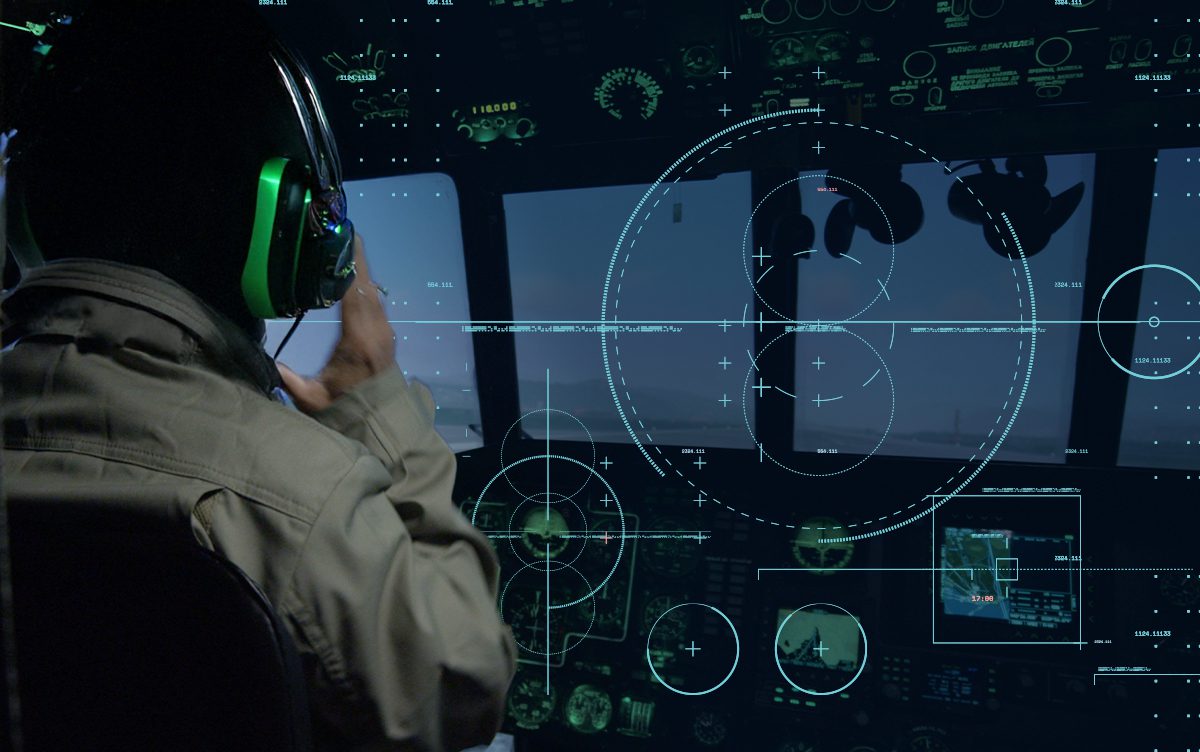
Using technology operators are familiar with, DSS can display alerts, recommended actions, and operational guidance via touchscreens, voice commands, and heads-up displays. The aim is to reduce the workload of the human operator by condensing relevant data into usable presentations.
Key challenges aircraft operators face
Flying a helicopter is an exceptionally demanding task. It takes a great deal of skill, focus, and mental agility to operate a rotary aircraft. DSS is there to help overcome issues that could jeopardise the safety of the aircraft and crew by reducing the task load and providing greater situational awareness. Knowing that a data-driven decision support system is quietly working in the background also allows the pilot to focus, minimising distractions and mental fatigue.
The benefits of Decision Support Systems in aviation effectively reduce these challenges by:
- Improving safety
- Reducing pilot workload
- Minimising stress
- Reducing the likelihood of distractions
- Enhancing situational awareness
- Collating data into usable streams that are free of any ‘fluff’ or unnecessary information that may distract from the relevant information required
- Improving response times and mission/operational efficiency.
The evolution of DSS in avionics
The concept of data-driven DSS is not new. In avionics, DSS includes essential processes such as early-warning systems that notify a pilot of operational failures or of systems operating below normal parameters. Integrated avionics and flight management systems streamline operations, while digital cockpits are a natural evolution of earlier analogue versions.
The use of onboard systems that can also connect with ground-based data streams has led to the evolution of systems such as FlySight’s groundbreaking OPENSIGHT consoles. These represent the next step in the evolution of DSS in avionics, integrating far more complex algorithms and proliferating the use of AI and Enhanced Reality. The result is that modern cockpits are far more advanced than ever before, but at the same time are much more ‘user-friendly’ too.
Key functions of DSS in modern aircraft
Knowledge-based DSS introduces several key functions into the operational procedures of modern aircraft. These include:
- Situational Awareness Enhancement – This is achieved through the integration of data from a variety of sources, including radar, GPS, weather sensors, and terrain databases.
- Flight Path Optimisation – By meshing with ground systems for trajectory-based flight plans, DSS can support 4D navigation, reroute coordinates based on the latest terrain data, and help pilots comply with data-driven Air Traffic Control and mission command instructions.
- Fault detection and diagnosis – Onboard sensors continuously monitor aircraft performance to ensure key components operate at optimal efficiency. If a fault is detected, it can be diagnosed quickly and addressed without compromising the aircraft’s or crew’s safety.
- Emergency and abnormal situation handling – In highly stressful situations, data-driven DSS can assist the pilot in making command decisions to respond proactively to emergencies or abnormal situations.
The role of AI and Data Analytics in Avionics DSS
Advanced AI algorithms support improved decision-making by applying machine learning to identify patterns. This could range from operational parameters to identify when an aircraft is performing below normal levels, triggering a deeper dive into system data to isolate any issues that may need to be addressed.
The incredible capability of AI algorithms also allows a far greater variety of data to be ‘crunched’, including big data from fleet-wide operations. This could help identify where operational procedures are less efficient and how to rectify them without impacting mission success rates.
AI algorithms used in data-driven DSS mean data input and output timescales are far shorter, allowing for near real-time updates to mission information, even while the aircraft is airborne – subject to connectivity. This provides greater situational awareness and a more fluid approach to mission parameters, enabling the pilot and crew to make quicker, more effective decisions.
Real-world applications and use of DSS in avionics
Data-driven DSS has myriad applications in the real world, especially in avionics. These include integrated external systems and onboard data-gathering processes, such as weather awareness from onboard weather radar and/or satellite-derived weather data. An example might be Search & Rescue teams working at sea or in mountainous terrain; in these situations, terrain awareness and warning systems (TAWS/HTAWS) also play a vital role in aircraft safety, route determination, and operational procedure, providing pilots with a far greater level of situational awareness.
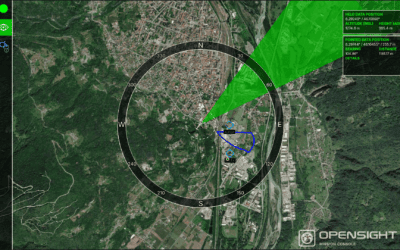
For military applications, target recognition, capture, and tracking are crucial to both mission success and the safety of the aircraft and crew. Utilising systems such as FlySight’s OPENSIGHT Mission Console provides operators with user-friendly, data-driven DSS modules that can be easily integrated into legacy systems.
This functionality is also applicable to policing operations, for example, in crowd control, where knowledge-driven DSS can draw on algorithms that analyse crowd flow and identify anomalies, as well as terrain data.
FlySight OPENSIGHT and its decision support system capabilities represent the cutting edge of data-driven DSS for avionics. The consoles are not only intuitive and compact, but also allow operators to customise their functionality to suit their exact needs.
OPENSIGHT is a multi-platform Processing, Exploitation, and Dissemination system that enables pilots and crew to make the right decisions with up-to-date information gathered from multiple sources. These sources include both onboard and third-party data, such as detailed terrain mapping that can be overlaid to create realistic Enhanced Reality imagery. A comprehensive, adaptable geo-exploitation toolbox, packed with features such as dehazing for better visual rendering, is delivered via modular plug-ins. This makes OPENSIGHT a uniquely adaptable system that can be easily incorporated into a wide range of aerial platforms.
You can find out more about OPENSIGHT by browsing our Solution page and our informative library of videos and brochures, or contact us direct for more information today.